
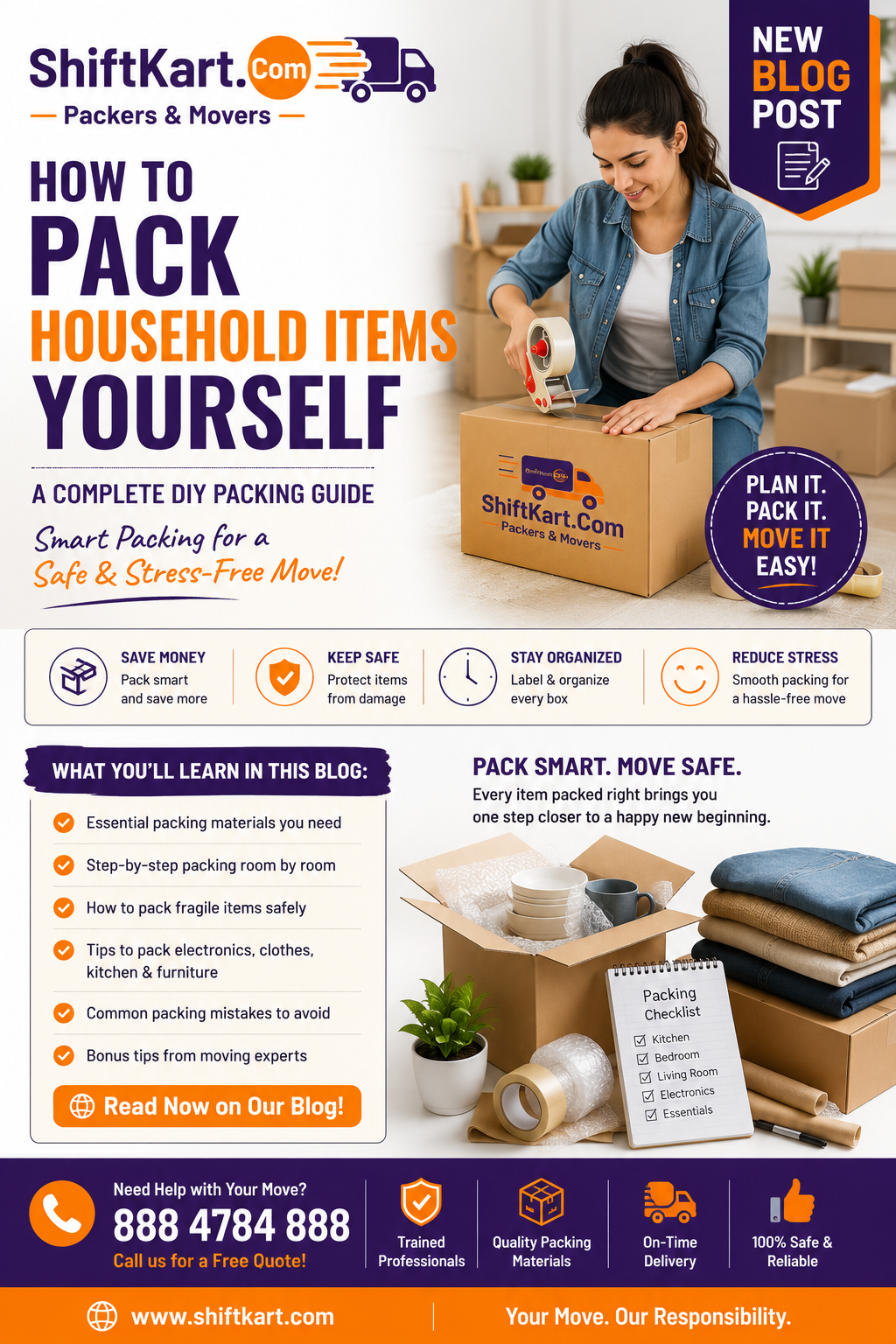
How to Pack Household Items Yourself: A Complete DIY Packing Guide
Moving to a new home is exciting, but packing your belongings can be overwhelming. Whether you’re relocating within Bangalore or moving to another city, proper packing is essential to protect your valuables from damage during transit.
In this comprehensive guide, ShiftKart Packers & Movers shares practical tips on how to pack household items yourself while ensuring a safe and hassle-free move.
Why Proper Packing Matters
Packing isn’t just about placing items into boxes. Proper packing helps:
- Prevent damage during transportation
- Organize belongings efficiently
- Save unpacking time
- Reduce moving stress
- Protect fragile and valuable items
Whether you’re moving a studio apartment or a large villa, following the right packing techniques can make all the difference.
Essential Packing Materials You’ll Need
Before you start packing, gather all the necessary materials.
Packing Essentials
- Strong cardboard boxes
- Bubble wrap
- Packing paper
- Stretch wrap
- Packing tape
- Marker pens
- Labels
- Zip-lock bags
- Furniture blankets
- Scissors
- Rope or straps
Using high-quality packing materials significantly reduces the risk of damage during house shifting.
Step 1: Declutter Before Packing
Moving is the perfect opportunity to remove unnecessary items.
Separate your belongings into:
- Keep
- Donate
- Sell
- Recycle
- Dispose
Packing fewer items saves time, effort, and moving costs.
Step 2: Pack One Room at a Time
Packing room by room keeps everything organized.
Start with rooms you use less frequently, such as:
- Guest room
- Storage room
- Study room
Pack your daily essentials last.
Step 3: Label Every Box Clearly
Every box should include:
- Room name
- Contents
- Fragile (if applicable)
- This Side Up
Example:
Kitchen – Glassware – Fragile
Proper labeling makes unpacking much easier.
How to Pack Kitchen Items
Kitchen items are among the most fragile household belongings.
Tips
- Wrap plates individually.
- Use bubble wrap for glasses.
- Fill empty spaces with paper.
- Keep heavy utensils at the bottom.
- Seal liquids tightly.
Avoid overloading kitchen boxes.
How to Pack Bedroom Items
Pack clothes in wardrobe boxes whenever possible.
For bedding:
- Fold neatly.
- Store in vacuum bags.
- Label separately.
Keep jewelry and important documents in a personal bag.
How to Pack Living Room Furniture
Furniture requires extra care.
Protect Furniture By:
- Removing detachable parts.
- Wrapping corners with foam.
- Using furniture blankets.
- Covering wooden furniture with stretch wrap.
Never drag heavy furniture across the floor.
How to Pack Electronics
Electronics are expensive and delicate.
Best Practices
- Use original boxes if available.
- Remove batteries.
- Wrap cables separately.
- Label all cords.
- Protect screens with soft cloths.
Take photos before disconnecting devices for easy setup later.
How to Pack Fragile Items
Fragile items require special attention.
Examples include:
- Glassware
- Mirrors
- Photo frames
- Ceramic items
- Decorative pieces
Wrap each item individually using bubble wrap and avoid stacking heavy objects on top.
How to Pack Books
Books are surprisingly heavy.
Pack them in:
- Small boxes
- Flat position
- Tight arrangement
Avoid using large boxes that become too heavy to lift.
How to Pack Clothes
Options include:
- Suitcases
- Wardrobe boxes
- Vacuum storage bags
Separate seasonal clothes from everyday clothing.
Prepare an Essentials Box
Keep one box containing items you’ll need immediately after moving.
Include:
- Phone charger
- Medicines
- Toiletries
- Important documents
- Snacks
- Water bottles
- Basic kitchen utensils
- Extra clothes
This saves time during your first day in your new home.
Common Packing Mistakes to Avoid
Many people make avoidable packing mistakes.
Avoid:
- Overfilling boxes
- Mixing heavy and fragile items
- Forgetting labels
- Using weak boxes
- Packing liquids carelessly
- Leaving empty spaces inside boxes
Proper packing prevents unnecessary damage.
When Should You Hire Professional Packers & Movers?
While DIY packing works for smaller moves, professional assistance is recommended if you’re moving:
- Large homes
- Heavy furniture
- Office equipment
- Vehicles
- Long-distance relocations
Professional movers have the experience, equipment, and packing materials to ensure a smooth relocation.
Why Choose ShiftKart Packers & Movers?
At ShiftKart Packers & Movers, we provide reliable relocation services designed to make your move stress-free.
Our Services Include:
- House Shifting
- Office Relocation
- Packing & Unpacking Services
- Furniture Shifting
- Car Transport Services
- Bike Transport Services
- Loading & Unloading
- Storage Solutions
Our trained professionals use premium-quality packing materials to protect your belongings throughout the moving process.
Final Thoughts
Packing household items yourself can save money and help you stay organized, but it requires careful planning and the right materials. By following these expert packing tips, you can protect your belongings and enjoy a smoother relocation.
If you’d rather leave the heavy lifting to professionals, ShiftKart Packers & Movers is here to help with safe, affordable, and reliable moving services.
Contact ShiftKart Packers & Movers
📞 Call: 888 4784 888
🌐 Website: www.shiftkart.com
Your Move. Our Responsibility.