
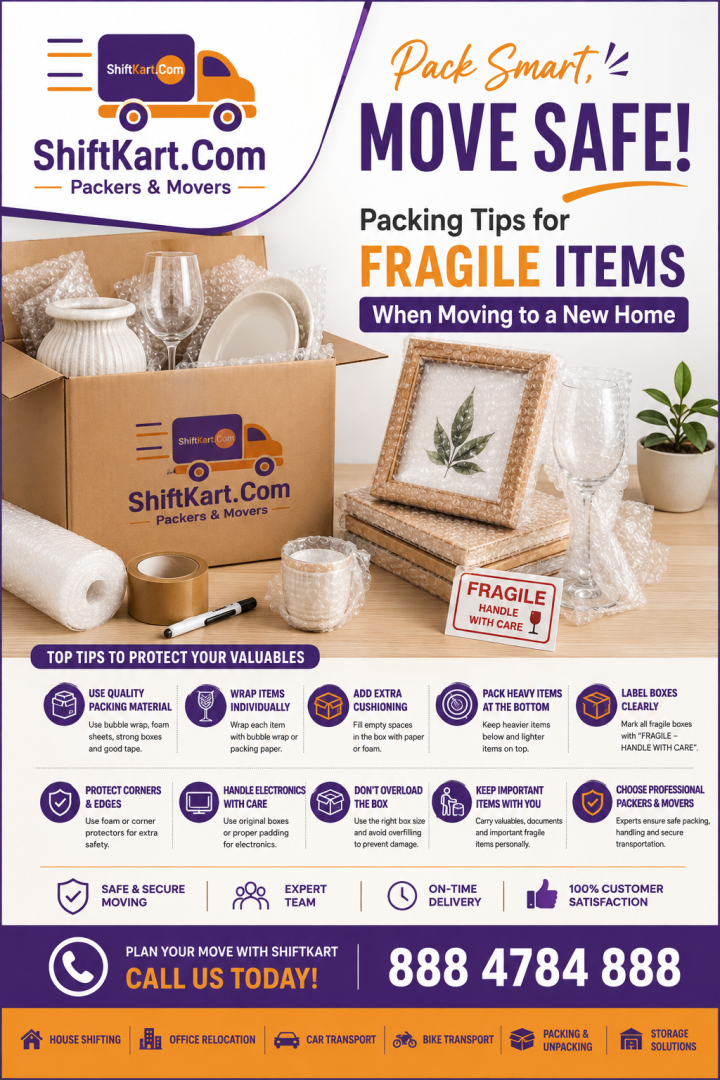
Moving to a new home is exciting, but packing fragile belongings can be stressful. Glassware, crockery, electronics, mirrors, artwork, and decorative items can easily get damaged if they are not packed properly.
With the right packing materials and techniques, you can significantly reduce the risk of breakage during transportation. Here are some practical fragile-item packing tips to help make your house move safer and smoother.
1. Make a List of Fragile Items
Before you start packing, identify everything that needs extra care. Common fragile items include:
- Glassware and wine glasses
- Plates, bowls, and crockery
- Mirrors and photo frames
- Lamps and decorative items
- TVs and electronic devices
- Vases and showpieces
- Kitchen appliances
- Artwork and collectibles
Keeping a list helps you make sure nothing delicate is overlooked.
2. Use High-Quality Packing Materials
The right packing materials provide an important layer of protection. Keep these supplies ready:
- Bubble wrap
- Corrugated cardboard boxes
- Packing paper or newspaper
- Foam sheets
- Thermocol or protective padding
- Strong packing tape
- Stretch film
- Marker pens
- Corner protectors
Avoid using damaged or weak boxes for heavy fragile items.
3. Wrap Every Item Individually
Never place multiple fragile items together without protection.
Wrap each item separately with bubble wrap or packing paper. For particularly delicate objects, use two or more layers of protection. Secure the wrapping with tape without placing adhesive directly on the item.
4. Protect the Corners and Edges
Corners and edges are often the first parts to get damaged.
For mirrors, picture frames, furniture with glass panels, and televisions, use foam or corner protectors before wrapping the entire item.
5. Choose the Right Box Size
Avoid putting fragile items into oversized boxes with lots of empty space. Items can move around during transportation and collide with one another.
Similarly, don't overcrowd a box. Choose a sturdy box that allows enough room for protective padding.
6. Add Cushioning Inside the Box
Place a layer of crumpled packing paper, foam, or bubble wrap at the bottom of the box.
After placing the items inside, fill empty spaces with additional cushioning material. The goal is to prevent movement when the box is lifted or transported.
7. Pack Plates Vertically
When packing plates and similar crockery, placing them vertically with padding between each piece can help reduce pressure on the plates.
Wrap each plate individually and add cushioning around the sides and top of the box.
8. Give Extra Protection to Glassware
Glasses and cups require individual wrapping. Fill hollow spaces inside delicate glasses with soft packing paper and wrap them completely.
Place heavier items at the bottom of the box and lighter glassware above them, with sufficient cushioning between layers.
9. Handle Electronics Carefully
For TVs, computers, monitors, and other electronics, the original packaging is ideal if you still have it.
If the original box is unavailable, use bubble wrap, foam sheets, and a strong carton. Keep electronic devices protected from moisture and avoid placing heavy items on top of them.
10. Pack Mirrors and Artwork Properly
Wrap mirrors and artwork with bubble wrap or foam sheets and protect their corners.
For larger pieces, use sturdy cardboard around the item. Make sure they are positioned securely so they cannot slide or fall during transportation.
11. Don't Leave Empty Spaces
Empty space inside a box allows items to move during transit. Fill gaps with packing paper, foam, or other suitable cushioning material.
A simple test is to gently shake the sealed box. If you hear or feel items moving, open it and add more protective material.
12. Label Every Fragile Box
Clearly mark boxes containing delicate belongings with:
FRAGILE – HANDLE WITH CARE
Also mention which side should remain upright when necessary. Proper labeling helps the moving team identify boxes that require extra attention.
13. Keep Important Fragile Items With You
If possible, carry extremely valuable or sentimental items personally rather than placing them with the general household shipment.
Examples include important documents, expensive jewelry, irreplaceable photographs, and small valuable collectibles.
14. Avoid Overloading Boxes
A box packed too heavily can become difficult to lift and may break from the bottom.
Distribute the weight across multiple boxes. Use smaller boxes for heavier fragile items and larger boxes for lighter belongings.
15. Consider Professional Packing Services
Packing fragile household items can take considerable time and requires the right materials and experience.
Professional packers and movers in Bangalore can provide specialized packing for furniture, electronics, glassware, appliances, and other delicate belongings. This can make the relocation process more convenient while reducing the risk of damage.
Final Thoughts
Fragile items require extra attention before and during a house move. Using quality packing materials, wrapping items individually, adding sufficient cushioning, choosing strong boxes, and clearly labeling fragile packages can make a major difference.
If you are planning a move in Bangalore, ShiftKart can help make your relocation simpler with professional packing, loading, transportation, unloading, and unpacking services.
Plan your move carefully, pack smart, and let your belongings reach your new home safely.